Turkish CEFR Levels from A1 to B1: What Each Level Means and What to Study
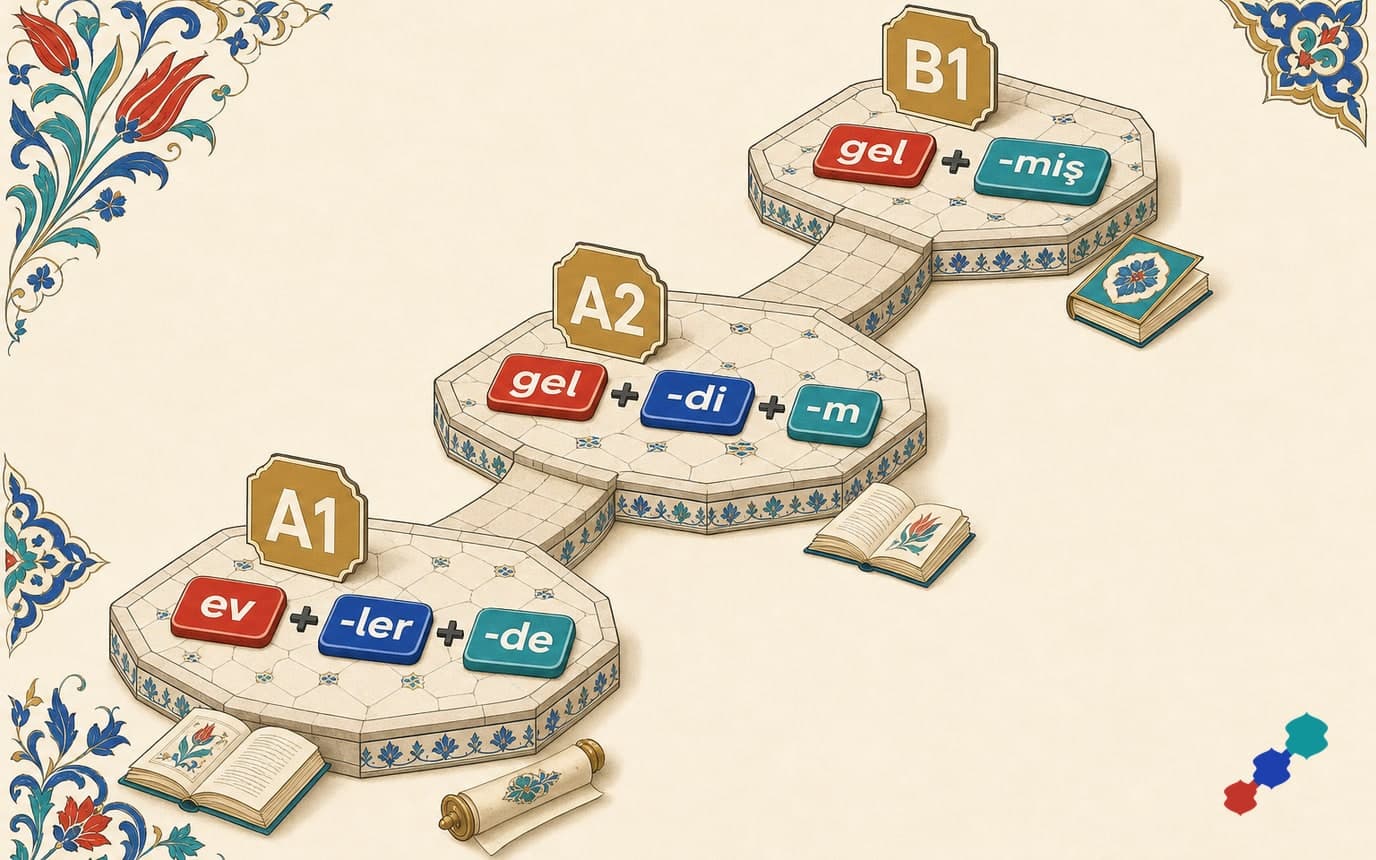
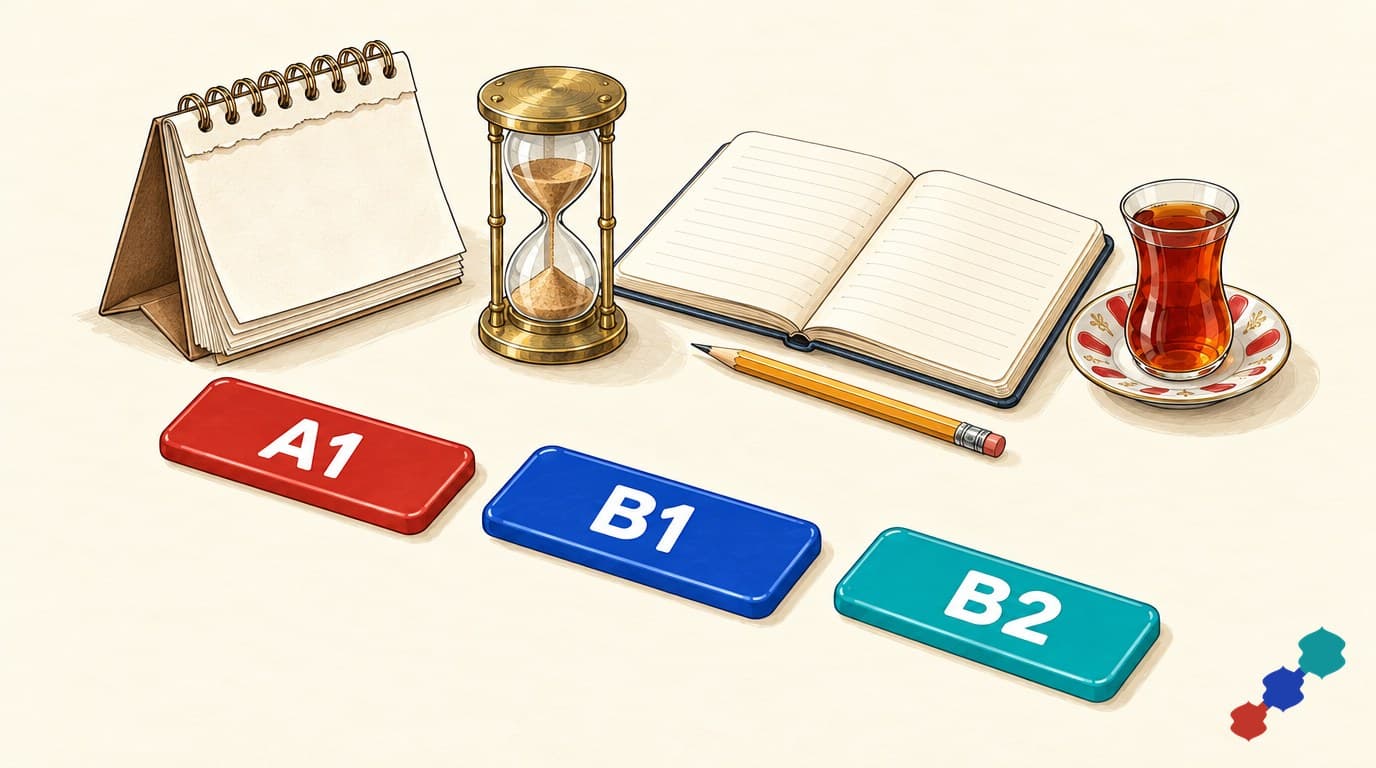
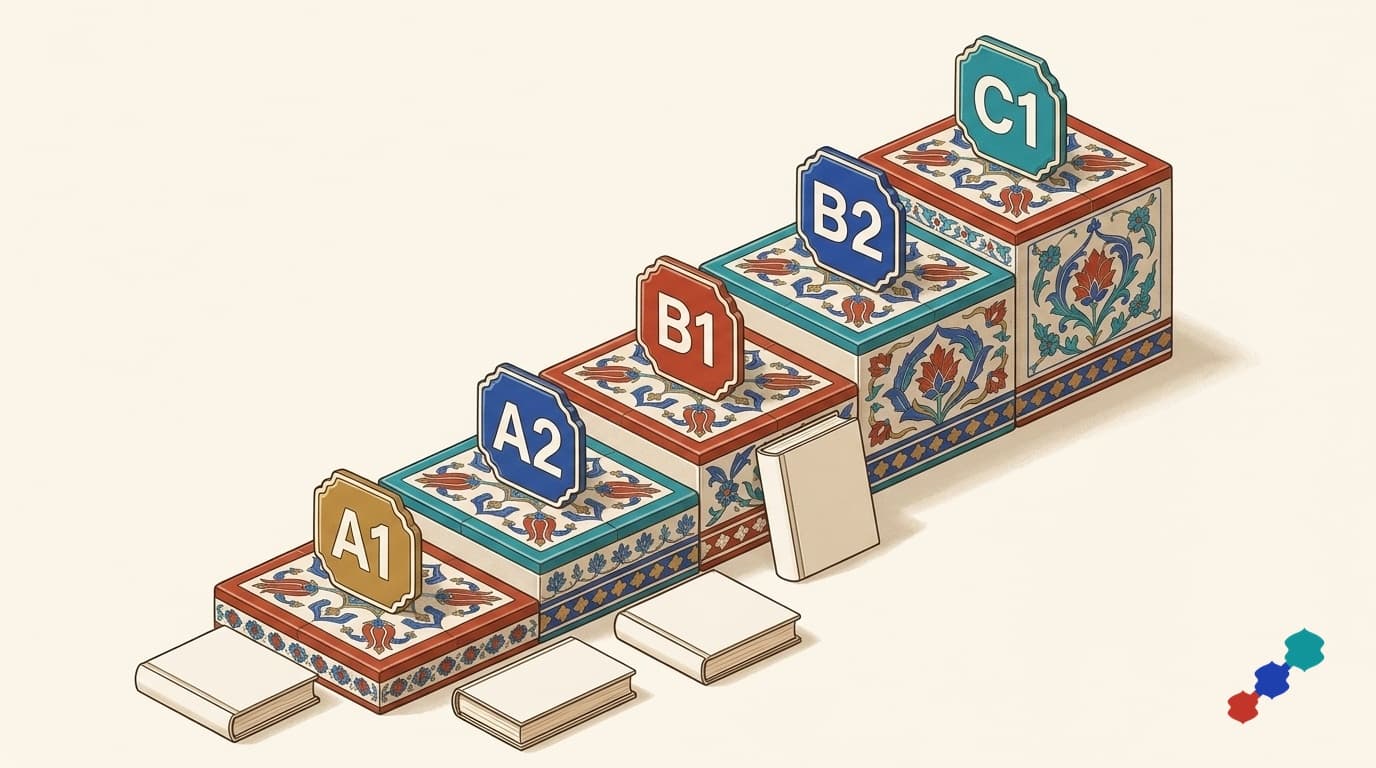
The CEFR describes what learners can do, not a Turkish syllabus. What A1, A2 and B1 mean for Turkish, with Dilsever's own word and topic counts.
Explore the architecture of Turkish: agglutinative joins, vowel harmony rules, curriculum guides, and cognitive science.

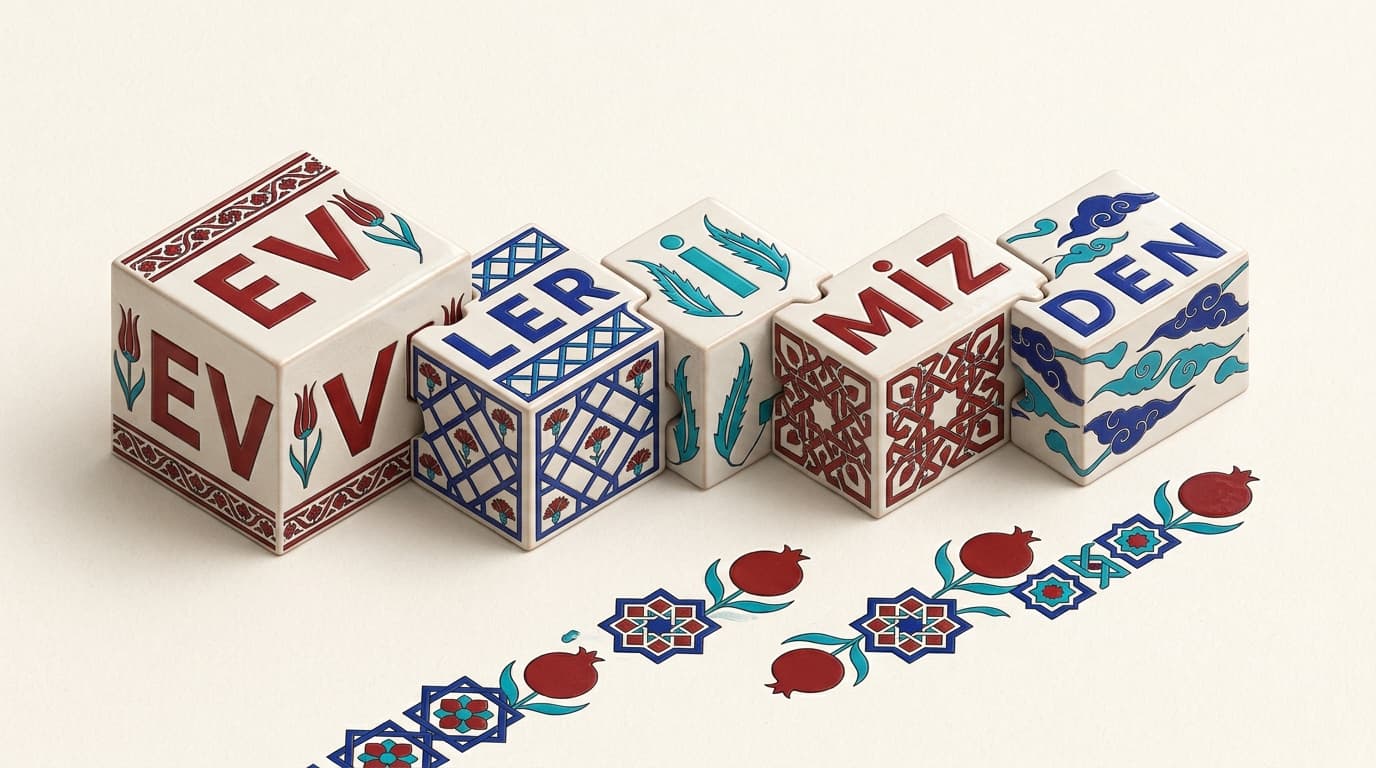
Turkish suffixes in tables: two-way and four-way vowel harmony, consonant changes, suffix order on nouns and verbs, and the exceptions to each rule.

The CEFR describes what learners can do, not a Turkish syllabus. What A1, A2 and B1 mean for Turkish, with Dilsever's own word and topic counts.

The forgetting curve and the spacing effect, stated precisely, and how Dilsever’s SM-2 scheduler sets each review interval for Turkish words.

Is Turkish related to Arabic? No, but it borrowed thousands of words. 22 shared everyday words, 24 false friends, and the 1928 switch from Arabic letters.

Turkish verb conjugation in tables: personal endings, the present continuous, aorist, past and future, negation, questions and the verbs that change stem.

A walk through the 82 grammar topics Dilsever teaches from A1 into B1, in learning order, with the reason each one sits where it does.

Turkish has six cases: the bare noun plus five endings. One table with every suffix, the y and n buffers, irregular pronouns and verbs that fix a case.

About 44 weeks of full-time study to a professional level, by the U.S. State Department’s figure: what that number counts, and what it leaves out.

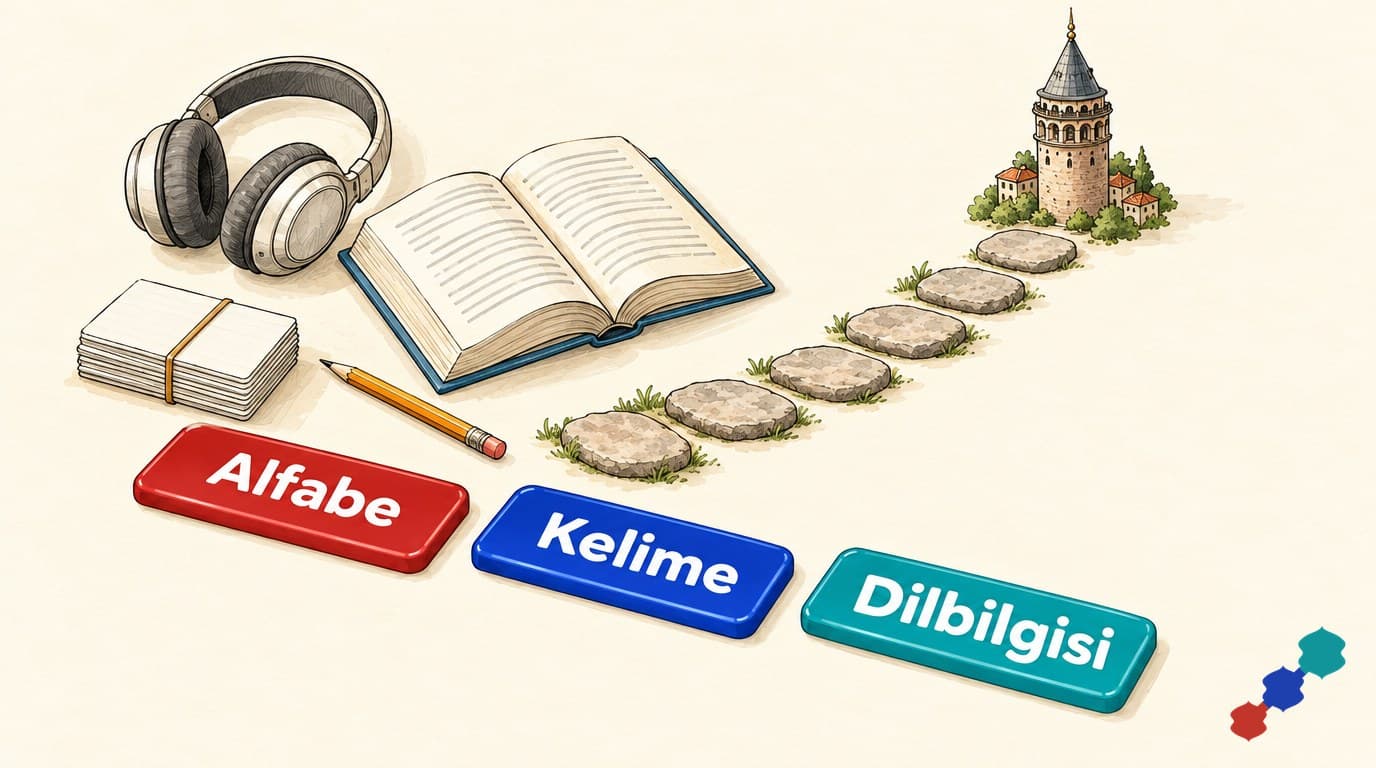
How to learn Turkish step by step: the alphabet, vowel harmony, suffixes, core grammar, vocabulary and listening, with a 12-week plan and free lessons.

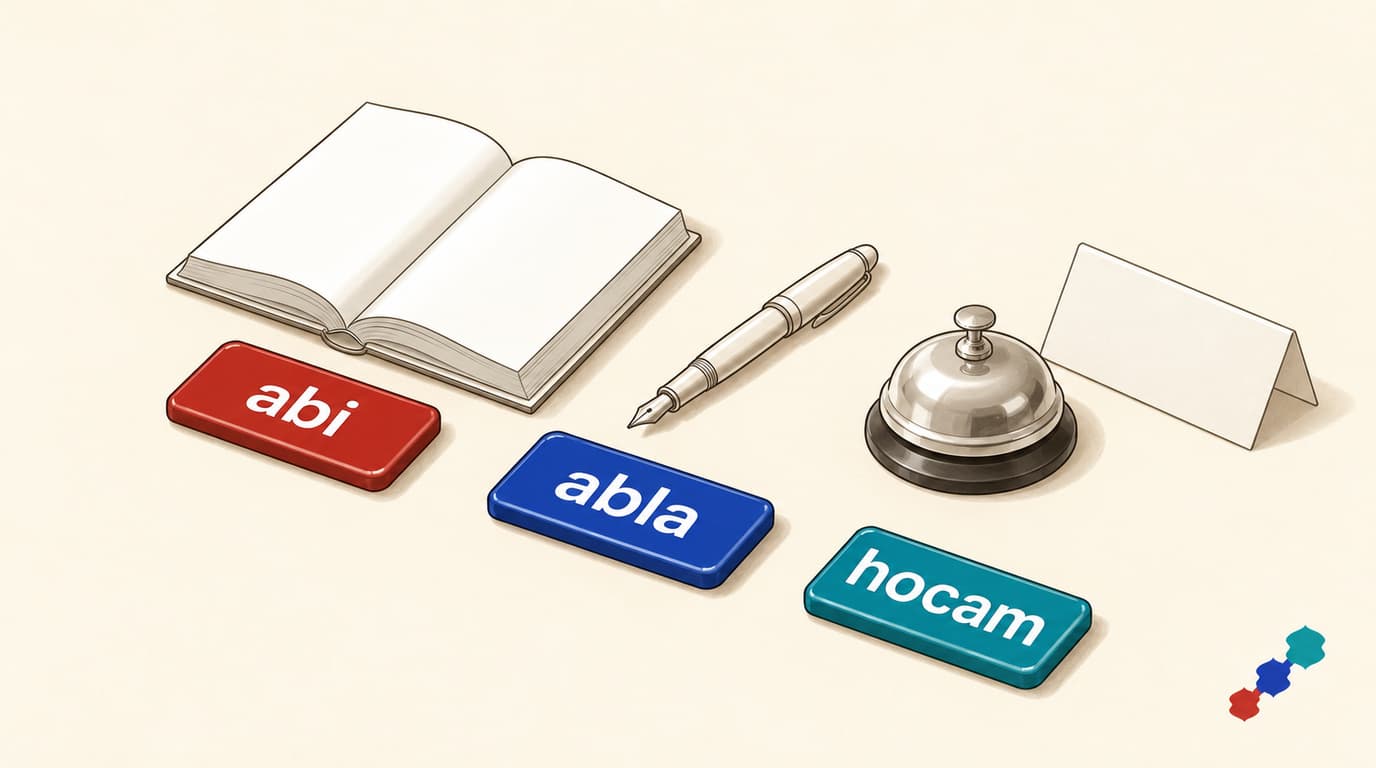
Abi means older brother, abla older sister, hocam my teacher. Who to say each one to, whether women say abi too, and Bey and Hanım, with audio.

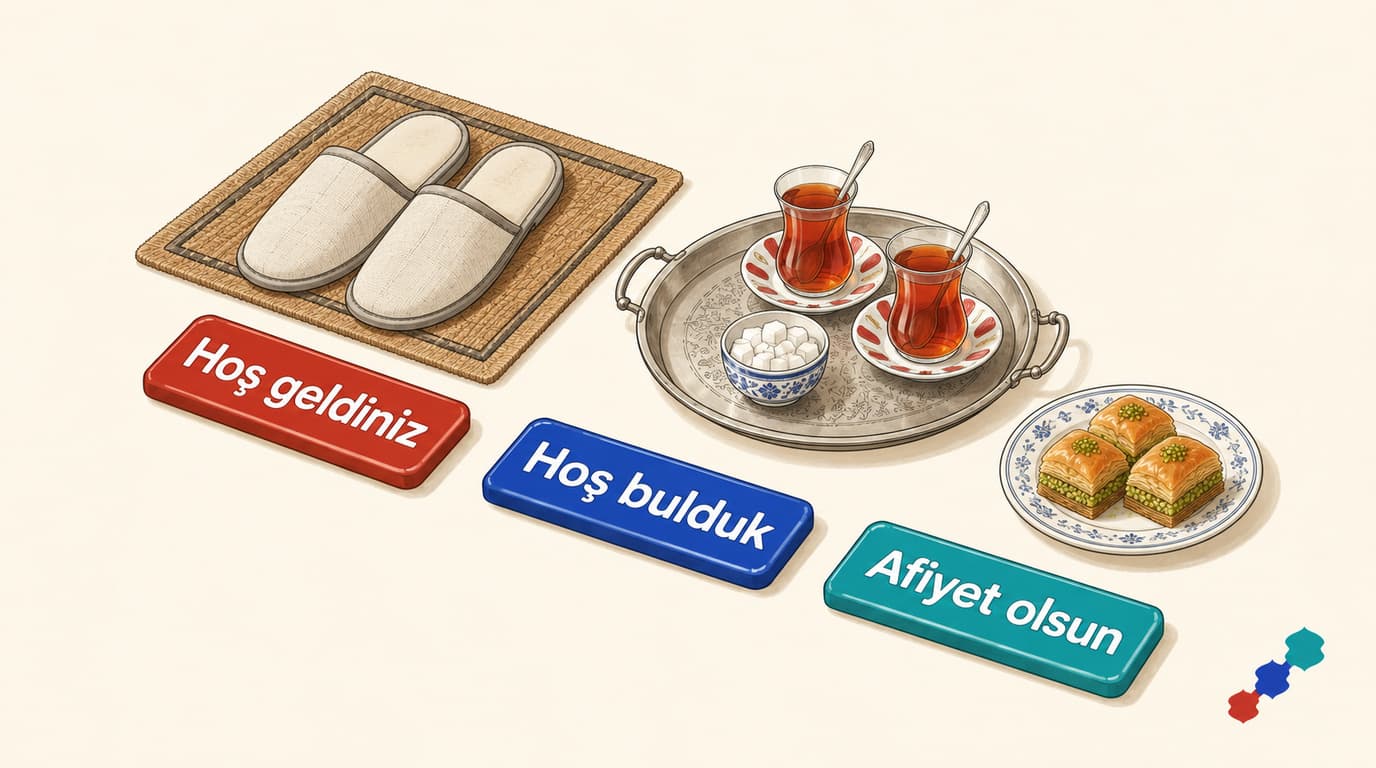
Hoş geldiniz means welcome, and the reply is hoş bulduk, even if you came alone. The set phrases of a Turkish visit, from door to goodbye, with audio.

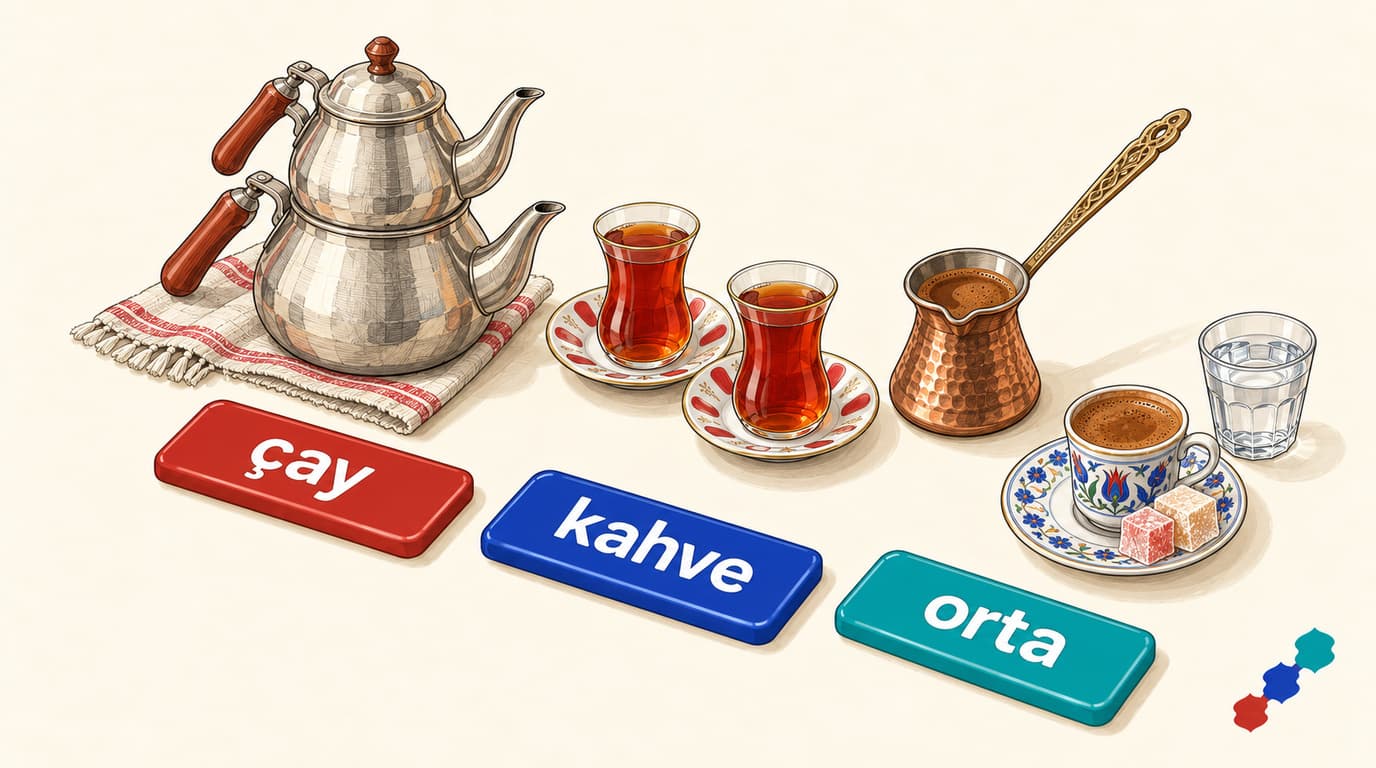
Tea is çay and coffee is kahve. How to say how sweet you want Turkish coffee (sade, orta, şekerli), ask for tea açık or demli, and hear every order.

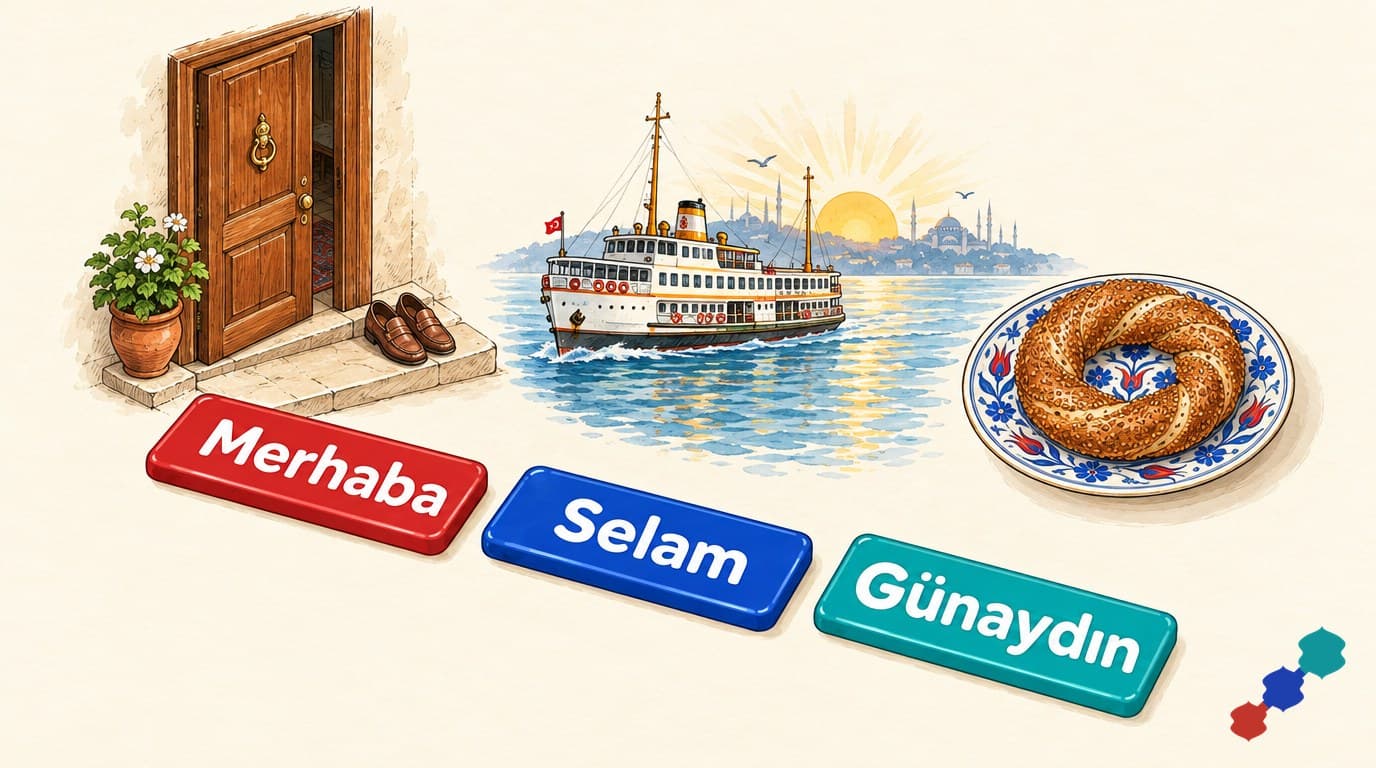
Hello in Turkish is merhaba. Learn selam, günaydın and iyi akşamlar, how to say them, what to reply, and which fits formal or casual moments, with audio.

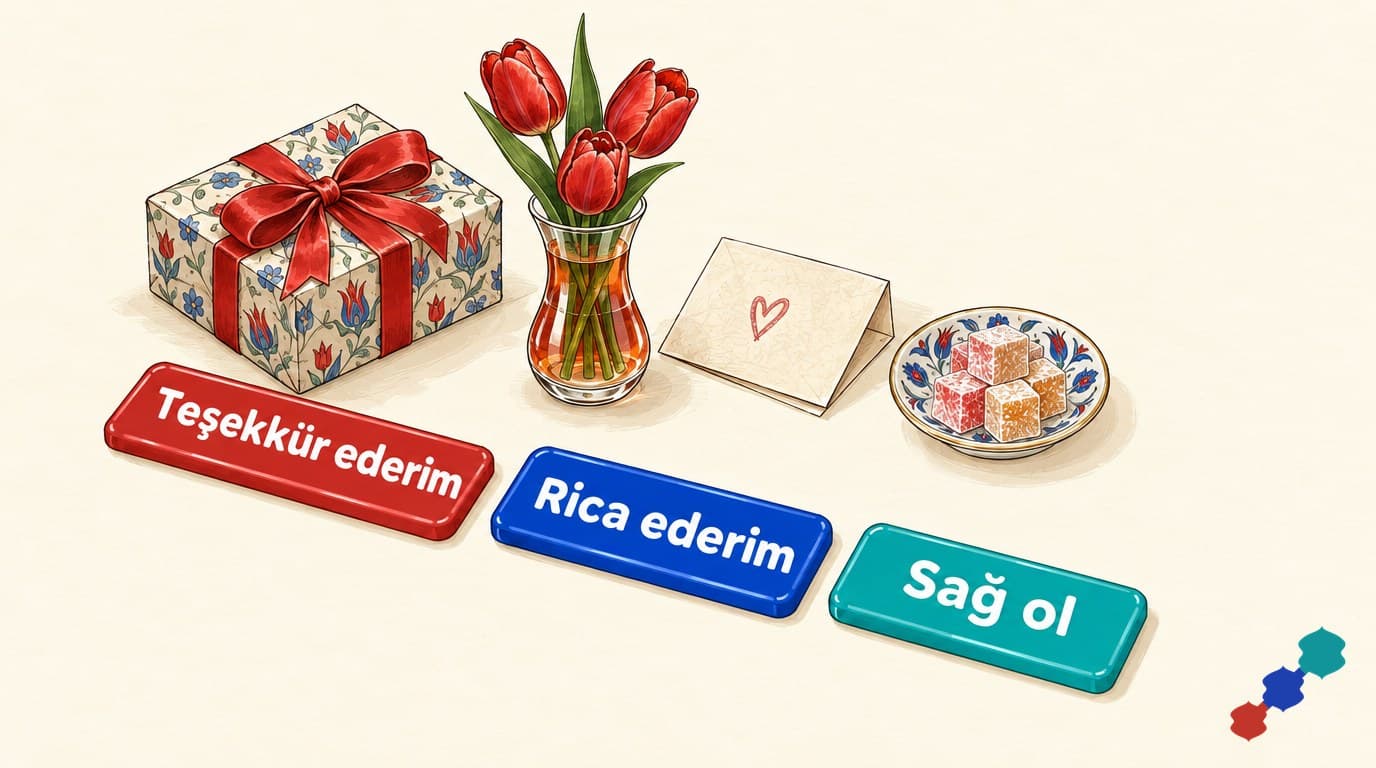
Thank you in Turkish is teşekkür ederim. Learn teşekkürler and sağ ol, how to pronounce them, when each one fits, and how to reply with rica ederim.

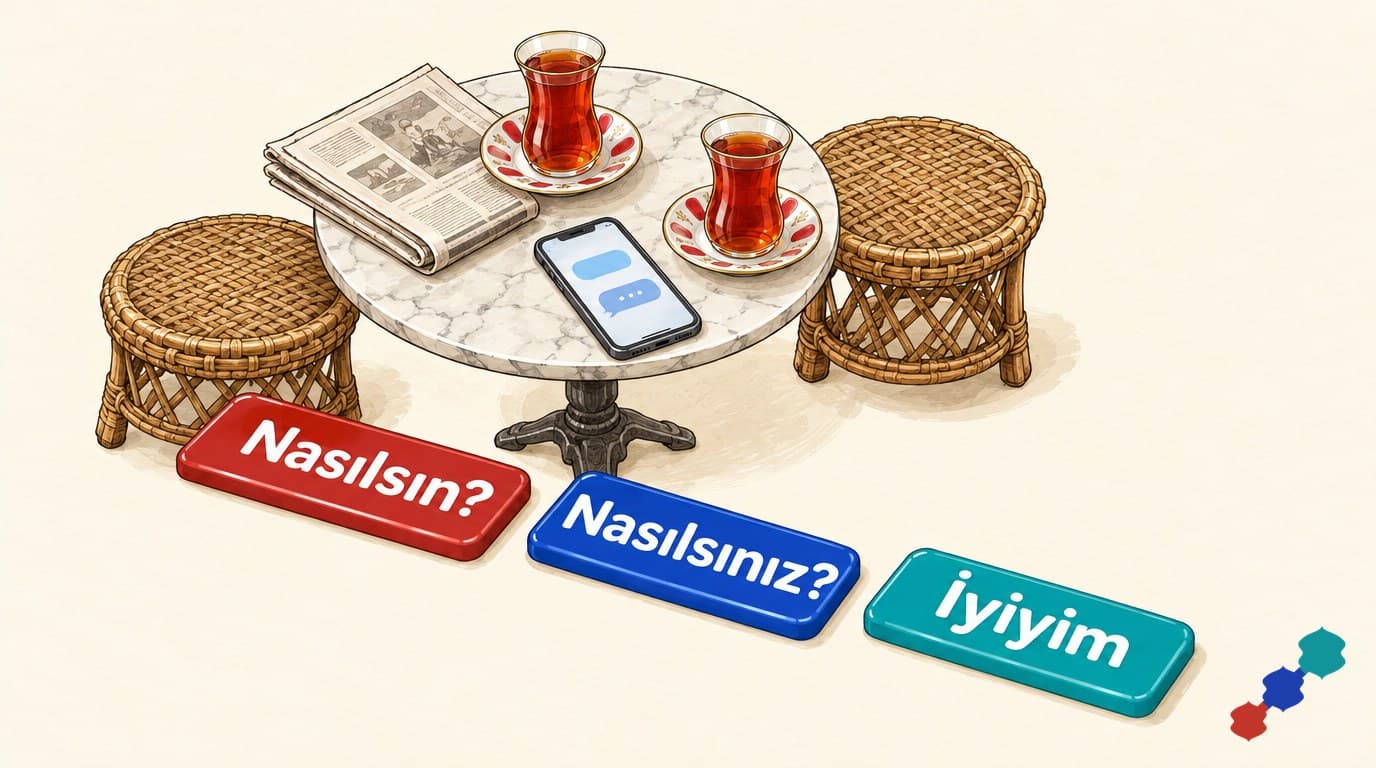
How are you in Turkish is nasılsın, or nasılsınız to be polite. Learn naber, how to answer with iyiyim, how to ask back, and how to say them, with audio.